Twin Lagoon.
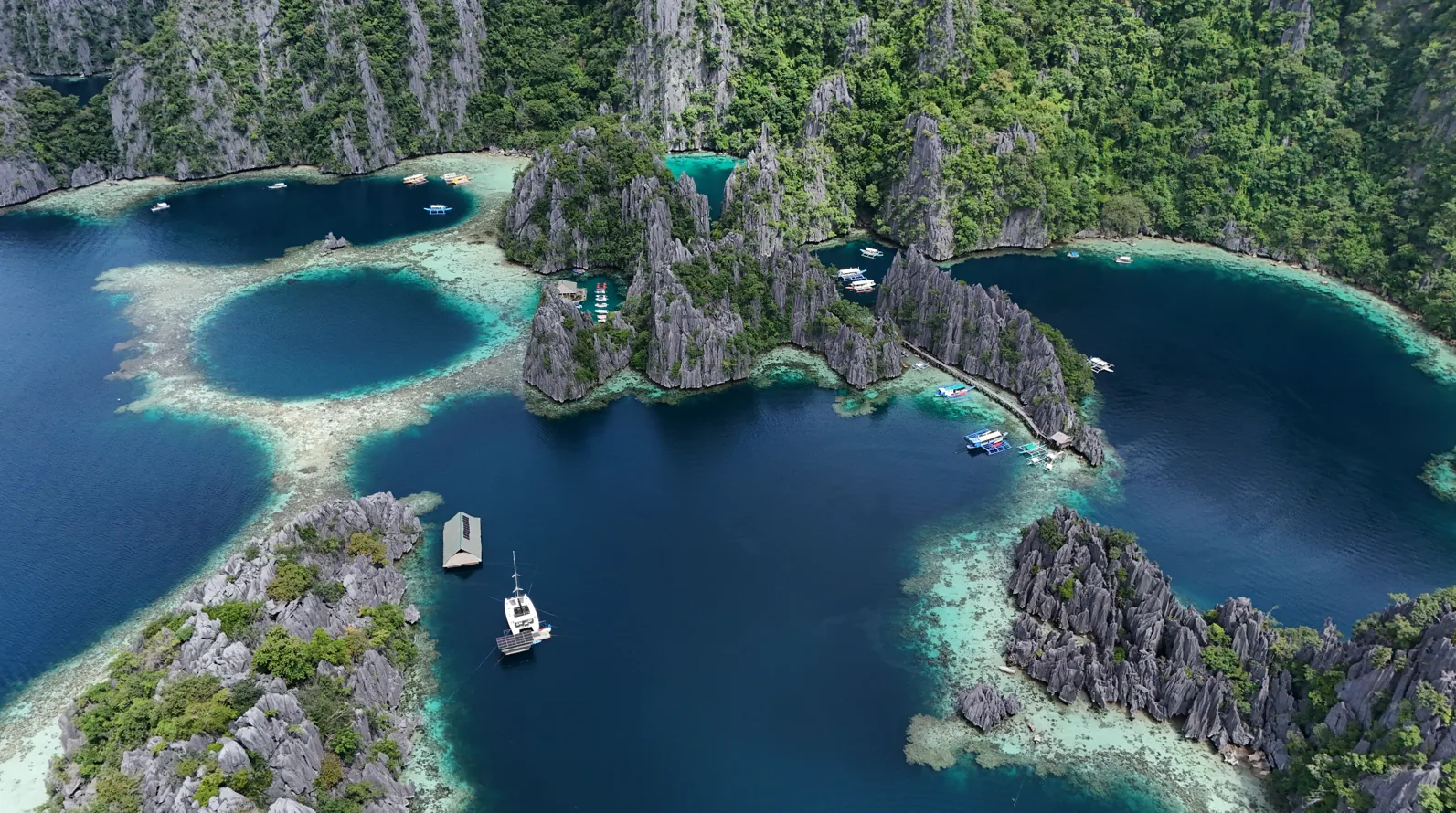
A limestone cathedral of water: an emerald outer basin and a hidden inner pool behind a rock arch.
11.9479° N, 120.2108° E · Coron Island
- Depth
- Outer ~10–15 m; Inner ~30–35 m
- Temp
- ~29–30 °C year-round
- Travel
- 15–20 min by speedboat / 30–45 min by banca
- Entrance fee
- ~₱200 (Tagbanwa conservation)
- Highlights
- swim-through arch, halocline effect, sheltered blue chamber
Introduction
Twin Lagoon is a place of pure enchantment – a iconic duo of turquoise lagoons hidden among Coron’s karst cliffs, often likened to a natural cathedral of water and stone. Arriving by boat, you’re greeted by towering grey limestone walls embracing an outer emerald lagoon. Just beyond, through a small crevice in the rock, lies the “inner” secret lagoon – a tranquil pool encircled by cliffs so high they nearly meet overhead. In local tour lore, the Twin Lagoons are where freshwater meets saltwater in a mesmerizing dance, creating shimmering visuals as if the water itself were alive. Picture yourself slipping from bright sun into a half-shadowed cove, the water ahead glistening strangely – that’s the moment you pass into the inner lagoon. It’s an experience straight out of a fantasy novel: at low tide you can freedive under the cliff archway, emerging into a silent blue chamber that feels completely separated from the outside world. Surrounded by dripping limestone and the echo of your breath, Twin Lagoon offers a storytelling backdrop for an unforgettable freedive adventure.
Freediving Conditions
Twin Lagoon’s waters are renowned for their halocline effect – a phenomenon where the less dense freshwater (from rain runoff) floats atop the saltwater, causing visible “heat ripples” and a slight haze where they mix. As a freediver, you’ll literally see the interface of these layers as you descend. The temperature difference isn’t as extreme as Barracuda Lake’s, but you may notice a mild thermocline with slightly cooler fresh water at the surface and warmer saltwater below. In terms of depth, the outer lagoon is relatively shallow (around 10–15 m in most areas), but the inner lagoon, which is the main attraction, reaches roughly 30–35 m deep in its central portion. Knowing that you’re floating above a 30m+ deep blue bowl adds to the thrill. Freedivers comfortable in the 15–20 m range will have plenty to explore along the dramatic rock walls just below the surface, while more advanced divers can drop straight down in the lagoon’s middle for depth training. Visibility here ranges from good to excellent, typically 15 m or more in the dry season. However, the halocline can blur things at certain depths, and after heavy rains the top layer of fresh water (being tannin-stained from vegetation) can be a bit less clear. Generally, though, the lagoons are prized for their clear, aquamarine water – when the sun beams in, it lights up the white sand patches and reflects emerald off the limestone. Currents are minimal inside the lagoons. The only time you’ll feel any current is near the passage between the two lagoons, where tidal flow can create a gentle push. Even then, it’s mild – you can easily swim through at slack or low tide when the water is calm. At high tide, the narrow gap floods completely, so boats anchor in the outer lagoon and visitors use a wooden ladder over the rock to access the inner lagoon instead. Freedivers can of course just duck through underwater at any tide (the underwater tunnel is roughly 2–3 m deep at high tide). Surface conditions are typically calm like a pool. The lagoons are sheltered from wind by the cliffs, so even on windy days the water inside remains flat. Only in the peak of afternoon might you get some surface chop if winds funnel through the opening. Entry & Gear: Reaching Twin Lagoon is only by boat (about 15–20 minutes from Coron town by speedboat, or ~30–45 minutes by banca/longtail). Most tours moor in the outer lagoon. You’ll usually don your gear in the water next to the boat. Freedivers should bring a float or buoy if training; you can tie off to jagged rocks along the lagoon edges or use the boat as a reference. There is no dedicated platform here – you’re in open nature. One convenient aspect: the inner lagoon’s edges have portions in shade (from the cliffs), so you can choose a sunny spot or a cooler shaded spot to rest and ventilate between dives. The water is warm (~29–30 °C year-round), so a thin wetsuit or even just a rash guard is sufficient.
Marine Life
While Twin Lagoon’s draw is primarily its scenery, marine life can still surprise you. In the shallow parts near the limestone walls, you’ll find clusters of hard corals and sponges clinging to the rocks. Small reef fish like damselfish, sergeant majors, and butterflyfish dart around these corals. It’s common to see neon blue chromis and other colorful juveniles nibbling on algae on the rocks. In the deeper sections, the bottom is mostly silt and sand with scattered rubble, so not much grows there – most life stays near the edges where light reaches. If you’re lucky, you might spot an occasional grouper or snapper lurking in a crevice, or a solitary batfish following you curiously in the inner lagoon. According to local guides, sometimes a sea turtle cruises in for a visit, especially in the early mornings when it’s quiet. Keep an eye out for juvenile barracuda; ironically, while Barracuda Lake has none, the Twin Lagoons sometimes have a school of small chevron barracuda or jacks patrolling the deeper water (the brackish mix attracts baitfish, which attract predators). Snorkelers will notice plenty of needlefish skimming the surface – their slender silver bodies are easy to spot in the clear shallows. Jellyfish are not typically an issue here (unlike some mangrove lagoons elsewhere); however, very small non-stinging jellyfish or tunicates might appear seasonally due to the mix of waters. Along the rocks, look for invertebrates like sea urchins tucked in crevices and various crabs scuttling about. Overall, Twin Lagoon is not a rich reef ecosystem like Siete Pecados; it’s more a scenic swimming hole with a modest sprinkling of sea life. The relative sparsity of big fish gives the inner lagoon an eerily peaceful vibe – just you and the sound of your fin kicks in a cathedral of stone and water.
Cultural and Environmental Notes
The Twin Lagoons don’t have a specific myth attached to them (unlike Siete Pecados’ legend), but they are part of the Coron Island territory of the Tagbanwa people. The Tagbanwa consider Coron’s lakes and lagoons as sacred gifts of nature. Visitors are asked to respect the site – this means no littering, no loud disturbances, and wearing life vests if you’re not an experienced swimmer. In fact, the local guardians have set up a rope line at the inner lagoon’s entrance historically to mark where tourists should stay for safety (keeping most casual swimmers in the shallower area). Freedivers, usually accompanied by guides, are allowed beyond to explore the full lagoon, but always practice good stewardship. Officially, Twin Lagoon is within a larger ancestral domain protected area, and it’s also overseen by the Coron tourism and environment authorities for sustainability. There is a controlled entrance fee (around ₱200), which helps fund maintenance of the ladders and employed park rangers. Environmentally, the mix of fresh and salt water here is an example of a coastal karst system. There’s likely an underwater tunnel or fissure connecting the lagoons to the sea (hence the tides). This means the inner lagoon does flush out to some degree, keeping it from becoming stagnant. Even so, sunscreen and oils from too many swimmers can harm the water quality – it’s recommended to use reef-safe sunscreen or rinse it off before entering. The spectacular setting of Twin Lagoon has made it an Instagram favorite in recent years. To protect it, local officials sometimes cap the number of boats that can enter at once. There are no permanent structures (no huts or shops) in the lagoons, by decree of the Tagbanwa, preserving its raw natural beauty. Culturally, when you glide through Twin Lagoon’s clear waters, you’re effectively in an outdoor “church” of nature – it commands a sense of reverence that every visitor feels.
Safety and Tips for Freedivers
Twin Lagoon is generally an easy, beginner-friendly site, but here are a few considerations for freedivers: Crowds and timing: During midday, especially in high season, the lagoons can get crowded with tour boats and life jacket-clad tourists floating around. For a safer, more serene freedive, try to go early morning or late in the day when fewer people are present. Less traffic means less boat fuel in the water and better visibility (not to mention easier to relax when you’re not weaving through snorkelers!). Entry/exit: If you’re swimming under the rock arch between lagoons, do so at low or mid tide when there’s headroom – at high tide, the clearance might be too tight to swim through without submerging fully for a few meters. It’s a short duck-dive, but wear fins and watch your head on the sharp rock overhead. Many a snorkeler has gotten a scrape by mis-judging the depth there. Freedivers will have no issue making the 3-4 second swim under, but always look up as you ascend on the other side. Ladder use: If you choose not to swim under (or conditions make it unsafe), use the wooden ladder on the side. It can be slippery – one hand for yourself, one for your fins! Ideally, wear your neoprene socks or full-foot fins to avoid cutting your feet on the rocks when climbing. Buoyancy and depth perception: The super clear water can be disorienting in terms of judging depth. You might think you’re just 5 m down when you’re actually 10 m, because the bottom is not always visible in the inner lagoon’s deepest part (it fades to blue). Use a dive computer or line if you’re training depth to avoid accidentally exceeding your planned depth. Halocline haze: When you cross the fresh-salt interface, your vision will blur for a moment (it looks like heat waves in the desert). Don’t panic – nothing’s wrong with your eyes or mask, it’s just the refractive difference. A few kicks deeper and it clears up again. The blurry layer is usually around 1–2 m thick somewhere between the surface and ~5 m depth. It can also feel like a very mild temperature change. Just descend through it slowly to enjoy the visual, then continue your dive. Marine life awareness: While there’s no dangerous marine life common to Twin Lagoon, do be mindful of urchins nestled in rock cracks if you’re hugging the walls. Stonefish have been reported in rocky shallows in Coron, so never stand on or hold onto submerged rocks. Also, occasionally small jellyfish-like creatures (hydroids or larvae) can appear – they might cause minor itching if they contact skin, so a rashguard can help if you have sensitive skin. No depths under boats: When multiple tour boats are present, they often anchor in the outer lagoon. Avoid diving under or near them (bubbles or sudden surfacing could startle boat crews, and in rare cases, boats may reposition). Stick to the sides or inner lagoon area for clear overhead environment. Environmental respect: As with all Coron sites, it’s strictly no-touch, no-take. The corals on the walls may seem hardy, but a single kick can break them. Similarly, do not attempt any freediving “tunnel” exploration beyond the known opening – there are some small caves in the limestone underwater, but none that are safe to enter without proper training and equipment. Finally, wear that life vest when you’re just relaxing on the surface after diving – not only is it rule in many Coron spots, it’s also good practice if you’re tired. In summary, Twin Lagoon is a stunning and safe playground for freedivers – by following these simple guidelines, you’ll have a magical experience gliding in its emerald waters, half in a dream and half in reality.
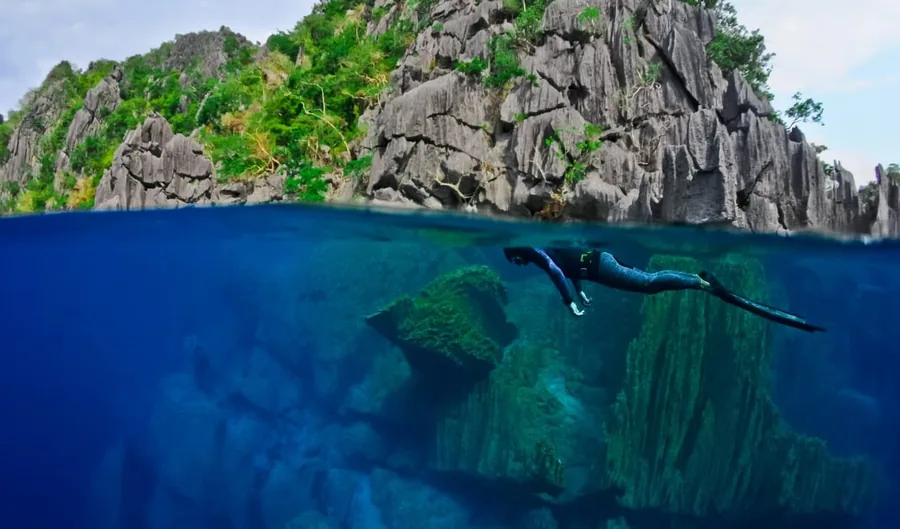 Barracuda LakeCoron Island · ~42 m deep
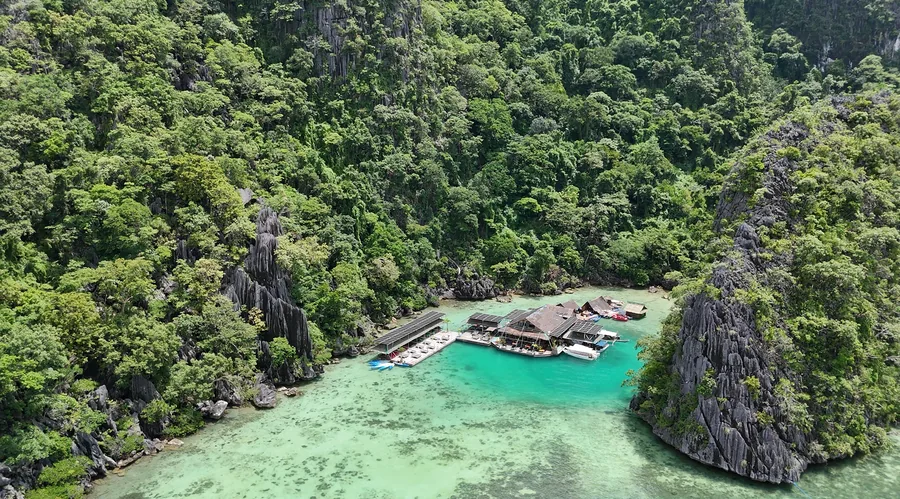 Paolyn Private LagoonsLaknisan Lagoon · ~30 m deep
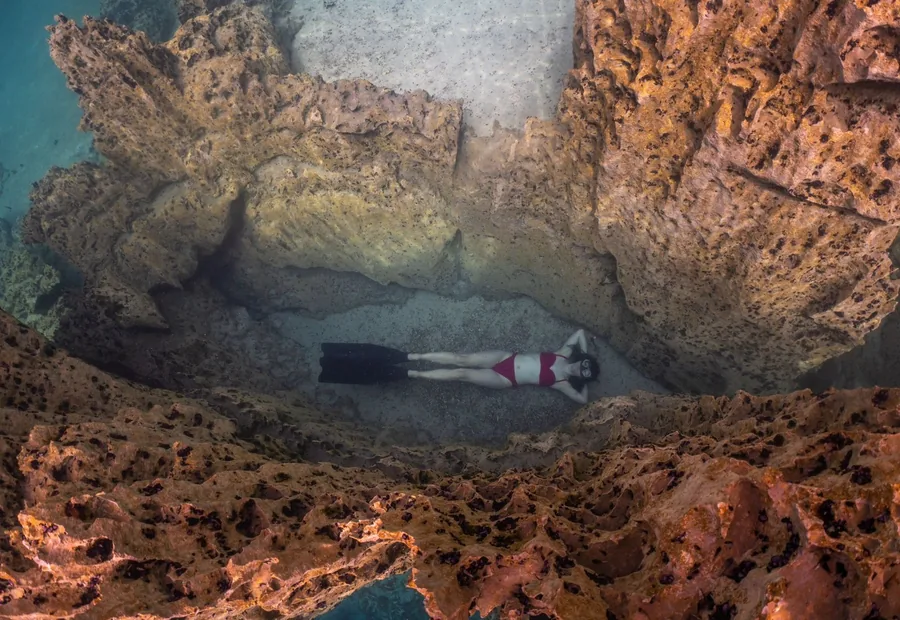 Cathedral CaveCoron Island · 6–8 m entrance
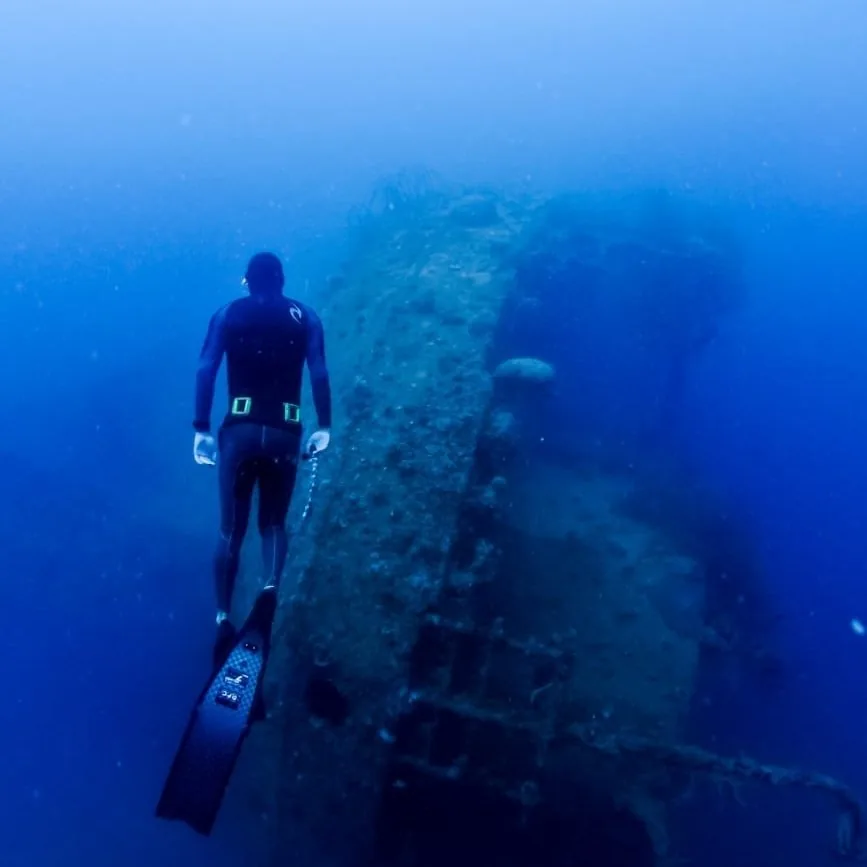 Lusong Gunboat WreckCoron Bay · Shallow wreck