Lusong Gunboat Wreck.
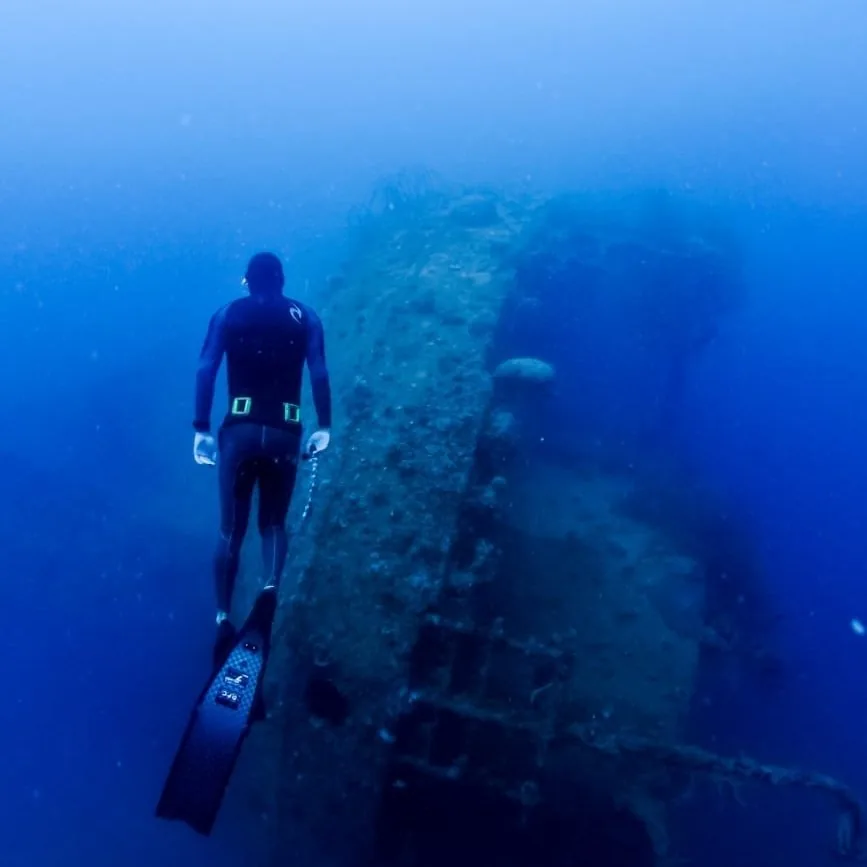
A WWII Japanese gunboat draped in corals in clear, shallow water.
11.9710° N, 120.0242° E · Coron Bay
- Depth
- ~5 m (bow) to ~14–15 m (stern)
- Length
- ~35–40 m (some sources ~25 m intact)
- Viz
- ~10–20 m, usually clear and bright
- Conditions
- Calm, light/no current; beginner-friendly
- Vibe
- WWII relic turned thriving coral reef; superb for photos
Introduction
In the shallow, crystal-clear waters off Lusong Island rests a haunting relic of World War II now transformed into a vibrant underwater garden. The Lusong Gunboat – once a Japanese warship – lies quietly on a slope, its corroded metal hull now festooned with corals and swaying soft fronds. For a freediver, the first glimpse of the wreck is magical: you duck your head underwater and suddenly see the outline of a ship’s skeleton just a few meters below, sunlight pouring through its broken ribs. Schools of fish weave in and out of the structure’s shadows. At low tide, part of the wreck’s stern even breaks the surface, as if beckoning snorkelers to come closer. There’s a sense of history here – this gunboat was sunk in September 1944 during a U.S. air raid, and over 80 years later, it has found peace as an artificial reef teeming with life. The setting around you is idyllic: turquoise water, a backdrop of green islands, and often you’ll have this shallow wreck all to yourself except for a few curious fish. Lusong Gunboat is often described as a “beginner’s wreck” due to its shallow depth and calm conditions, but its beauty captivates divers of all levels. It’s an accessible time capsule where one can freedive down to touch history (figuratively — look but don’t touch the coral!) and feel the melding of past and present under the sea.
Freediving Conditions
The Lusong Gunboat is a shallow wreck, making it perfect for coron freediving exploration and relaxed training days with a freediving center in the Philippines. Depth ranges from about ~5 m at the bow to ~14–15 m at the stern, which lies deeper down a gentle slope. At extreme low tide, parts of the wreck’s highest point can be just under — or even poking above — the surface. The wreck is roughly ~35–40 m long (some accounts list ~25 m for the intact portion).
Visibility is typically ~10–20 m, especially around noon when the sun slices through the water. The area is somewhat sheltered by nearby islands, so surface conditions are usually calm. Currents are generally none to light; occasionally there’s a gentle drift along the slope, but nothing strenuous.
Entry & approach: Boats usually anchor just off the wreck (often a small marker buoy). You’ll start in 3–4 m and swim over it. A surface float helps visibility, but a reference line isn’t essential because the wreck is clearly visible — it’s like snorkeling a reef. Confident freedivers can tour the entire length on a single dive around ~10 m; others can explore in short sections, surfacing between passes. Because the superstructure is collapsed and open, you can weave through beams and ribs in wide, airy spaces without true overhead penetration. The wreck lies on a sandy/coral-rubble bottom (~10–14 m), which glows beautifully when the sun is high. Water temp is a tropical ~27–30 °C; many use a thin suit or rashguard (for hydroids and sun). In short: shallow, warm, clear, and gentle — a freediver’s playground and a great add-on to freediving courses philippines itineraries.
Marine Life
What Lusong may lack in intact ship structure, it makes up for in life. Over decades, the gunboat has become a busy artificial reef. Hard corals blanket the hull — staghorn tables and boulder corals thrive, especially toward the sunnier bow. Clouds of damselfish and chromis flutter above the coral; anthias hover like confetti in the light. Peek under plates and you’ll often spot lionfish lazing in the shade (give those spines space!). Christmas tree worms and giant clams add color to the metal. Along the sloping side, watch for well-camouflaged stonefish; never place hands without looking. You may encounter cuttlefish, parrotfish, surgeonfish, butterflyfish, and angelfish, while the adjacent sand often hosts blue starfish and feather stars. Macro lovers find nudibranchs crawling the wreck’s nooks. At times, schools of fusiliers or sardines sweep past, pursued by trevally; in rare moments a juvenile blacktip reef shark may cruise the perimeter.
Just a few fin-kicks from the wreck sits the popular Lusong Coral Garden, a shallow patchwork of soft and hard corals where sea turtles are regularly seen grazing. The combo of wreck + reef means you get both a tangible WWII relic and a flourishing tropical ecosystem in a single, easy session.
Historical and Cultural Significance
The Lusong Gunboat is one of several Japanese wrecks that make Coron Bay a world-renowned wreck-diving destination. It was likely a Japanese Navy patrol boat/sub-chaser, sunk on September 24, 1944, during a major U.S. aerial strike that decimated a fleet hiding among the Calamian Islands (10–12 ships went down that day). Some accounts suggest it was bombed and burned; others that it was scuttled amid the attack. Its resting place in very shallow water hints it may have tried to beach or hide in the shoals.
Locals later found the “sunken ship” as a productive fishing spot; by the 1980s–90s, as Coron tourism grew, Lusong became a highlight precisely because snorkelers and beginners could enjoy it too. While not part of indigenous lore, it is woven into community memories of the war. Philippine law protects historical wrecks — no salvage, no removal — and Lusong’s true treasure today is ecological. Its easy conditions make it a common stop for introductory wreck experiences in both scuba and freediving courses philippines programs, helping place the Philippines on the global wreck-diving map. For visitors training with Apnea Total Philippines standards or looking for the best freediving course philippines, Lusong is often the first magical brush with wrecks under breath-hold.
Safety Considerations
Shallow ≠ limitless: Because it’s easy, people linger — don’t overstay. Keep a safety margin for smooth ascents.
Equalize early/often: Repeated drops to 8–12 m add up; keep Eustachian comfort in mind.
Traffic awareness: Popular with snorkelers; scan above before every ascent. A bright float helps boats track you.
Sharp metal & hooks: Rusted edges and old fishing line exist. Wear a thin suit/rashguard; never stick hands blindly.
Venomous residents: Stonefish/scorpionfish on rubble and lionfish under ledges — look, don’t touch.
Sun & hydration: Long surface time in open sun; use reef-safe protection or coverage.
Weather/tide: Usually calm. If a wind-chop or drift develops with tides, shorten dives and stay near the boat.
Training mindset: The slope can tempt “accidental depth.” Use a computer/line for drills. Treat it as open water even if it feels like a pool.
Conservation: No touching, no taking, no standing on wreck or coral. Avoid fin-kicking up sand near the structure.
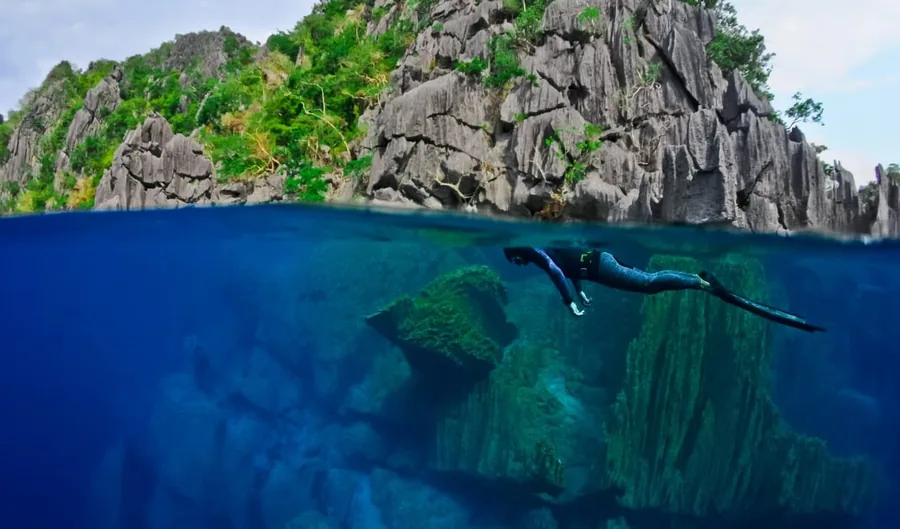 Barracuda LakeCoron Island · ~42 m deep
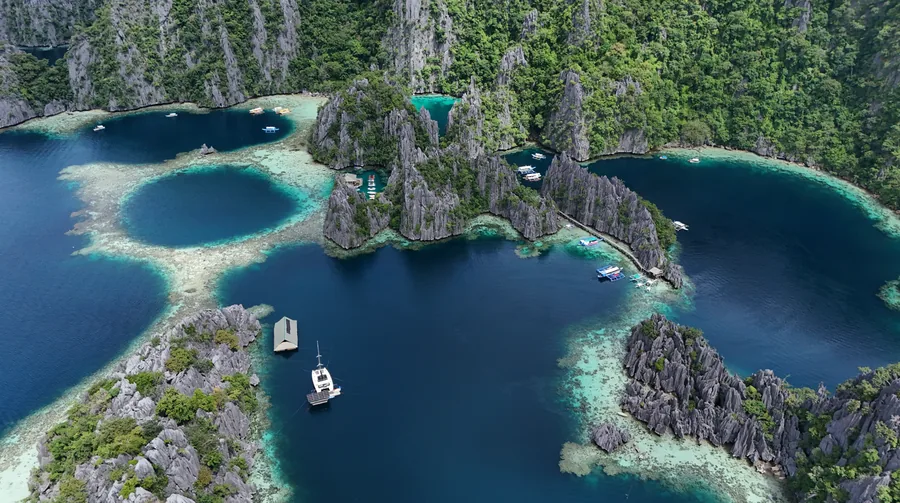 Twin LagoonCoron Island · 29–30 °C
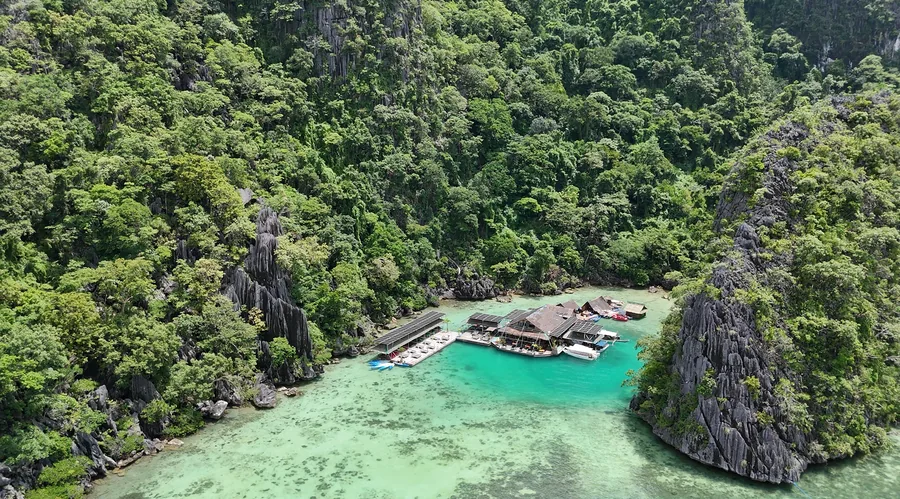 Paolyn Private LagoonsLaknisan Lagoon · ~30 m deep
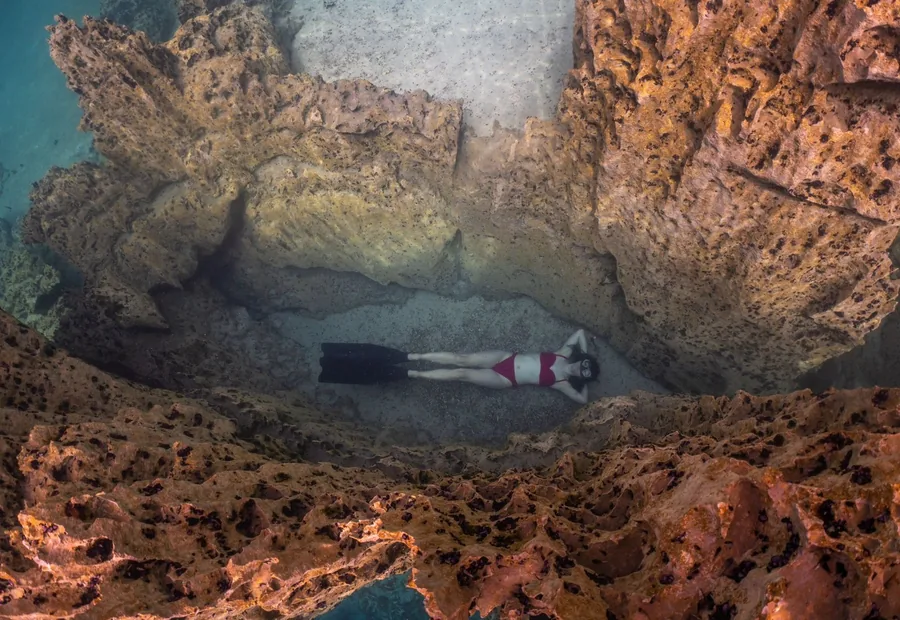 Cathedral CaveCoron Island · 6–8 m entrance