Siete Pecados Marine Park.
Seven islets, vibrant coral, turtles and barracuda: Coron's most colourful reef.
11.9841° N, 120.2303° E · Off Coron Town
Introduction
Just off the coast of Coron Town lies a cluster of seven rocky islets draped in green – collectively known as Siete Pecados (Spanish for “Seven Sins”). Beneath their unassuming surface, however, unfolds an underwater paradise straight out of a National Geographic film.
Legend has it that seven sisters once defied their parents to swim here, only to drown in a sudden storm. The seven islets are said to be their transformed bodies, and so the area earned its name. But far from ominous, Siete Pecados today is vibrant, colorful, and full of life – perhaps a redemption of those “sins.”
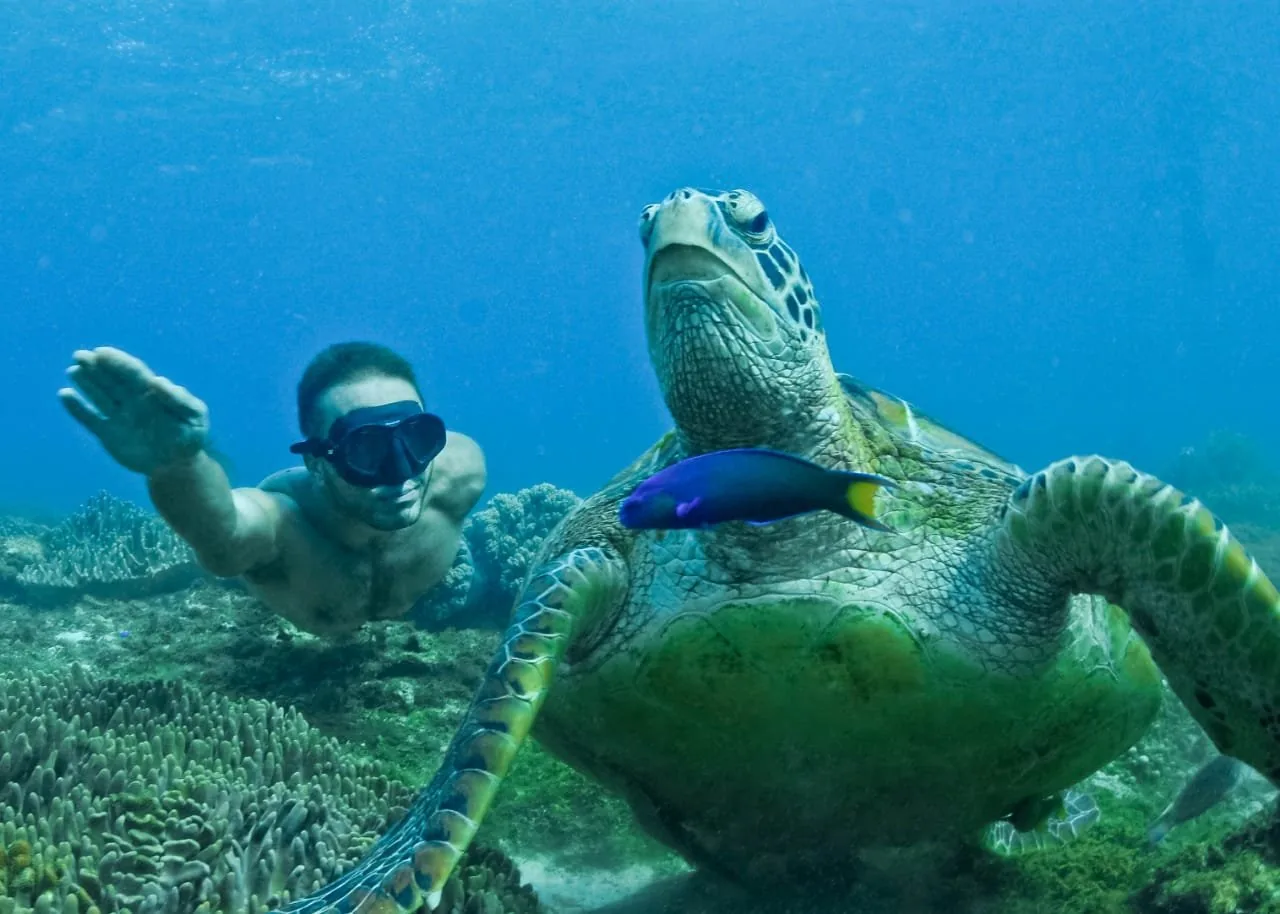
As your boat nears the marine park, the water turns a luminous blue-green. Look over the side and you may already see corals glowing just a few meters below. Freediving here is like slipping into a living kaleidoscope: vast coral gardens, schools of reef fish swirling around you, and shafts of tropical sunlight illuminating every detail. The marine sanctuary status means the fish are plentiful and unafraid, often swimming right up to greet you.
Freediving Conditions
Depth & Topography
Siete Pecados is a shallow freediving paradise. The reef starts right at the surface – during low tide, some corals sit less than a meter deep. From there, the reef slopes gradually to 12–15 m in most areas, with sandy channels reaching 18–20 m at the deepest points. On the outer edges, a few drop-offs plunge toward 22 m, ideal for experienced freedivers who want more challenge.
Visibility
Water clarity is excellent, typically 15–30 m. In dry season (Nov–May), visibility peaks, and you can see the bottom clearly even from the surface at 10 m. During rainy months, runoff may slightly reduce clarity, but strong currents keep the water clean.
Currents
Morning sessions are often calm, perfect for beginners. By afternoon, currents can pick up, especially between the islets. The drift is usually mild, but you’ll notice it when swimming back to the boat. A good approach is to start up-current and let the flow carry you over the reef. Rangers have also set up mooring buoys and fixed lines that snorkelers and freedivers can use for safety.
Surface Conditions
The islets act as natural barriers, breaking large waves. Most of the time, the water is calm with just a slight chop on windy afternoons. Since it’s only 5–10 minutes from Coron town pier, you’re never far from shore if weather shifts.
Water Temperature
Always warm, between 28–30 °C year-round. No thermocline, no halocline – just uniform tropical comfort. Many freedive in swimsuits or skins, though a 1–2 mm top is useful for jelly or sun protection.
Entry & Rules
Siete Pecados is a marine protected area (MPA) managed by local rangers. Rules are strict: no touching corals, no fishing, and by law all snorkelers must wear life jackets. Freedivers, however, are usually allowed without life jackets if with a guide and practicing buddy system. Rangers are vigilant: they’ll whistle if anyone stands on coral or breaks the rules – which keeps the reef pristine.
Best Time to Dive
Early morning is magical: calm seas, fewer boats, and plenty of fish activity. Midday is busier with island-hopping tours, but still worth it thanks to the reef’s size. Afternoons can have stronger current and lower light, but also a calmer, golden atmosphere.
Marine Life
Siete Pecados is often called Coron’s most biodiverse reef – and it shows.
Coral Gardens
Expansive fields of staghorn, table, and brain corals dominate, with huge colonies the size of cars. Vibrant soft corals wave from crevices, giving the reef its painter’s-palette look.
Reef Fish
- Parrotfish crunching coral with audible bites
- Butterflyfish darting in pairs
- Multiple species of anemonefish (“Nemo moments”) guarding their anemones
- Surgeonfish, angelfish, wrasses, fusiliers, and neon Chromis in dazzling schools
Bigger Encounters
- Turtles: Green turtles are often seen munching on sponges or surfacing nearby.
- Barracuda: Lone great barracuda or small schools of chevrons patrol the deeper edges.
- Trevally (Jacks): Occasionally streak through, chasing baitfish.
Macro Life
Nudibranchs, pipefish, tiny reef squid, and colorful clams reward those who look closely. Blue sea stars dot the sandy patches like scattered jewels.
Occasional Visitors
- Blacktip reef sharks at dawn or dusk
- Blue-spotted stingrays in sandy flats
- Bandit sea kraits (sea snakes), harmless but fascinating to observe
Because the site is so well protected, the fish here behave differently than in unprotected reefs – they are bold, curious, and come close, creating an intimate freediving experience.
Cultural & Environmental Significance
Legend
Local lore says seven sisters drowned here and became the seven islets. Another version tells of seven princes turned to stone for their sins. Whatever the tale, it imbues the site with cultural mystique and respect – guides often share the story as you approach.
Community Management
Established as an MPA in the early 2000s, Siete Pecados is managed by the local barangay in partnership with PCSD. Entrance fees (around ₱100) directly fund reef monitoring, ranger patrols, and mooring maintenance.
Global Recognition
In 2024, Siete Pecados won the Blue Park Award from the Marine Conservation Institute – a prestigious honor highlighting it as one of the world’s best locally managed MPAs. Fish biomass has skyrocketed, corals have flourished, and former fishers now work as rangers or guides.
Tourism Value
Its proximity to Coron town makes it one of the most visited attractions, but its protection keeps it thriving. It’s proof of how conservation and tourism can work hand in hand.
Safety Considerations
- Boat Traffic: Multiple tour boats often anchor here – always use a float/flag and surface with awareness.
- Currents: Mild, but stronger in afternoons. Plan dives accordingly.
- Marine Hazards: Fire corals, urchins, and camouflaged scorpionfish are present. Avoid touching anything.
- Jellyfish: Rare, but occasional blooms. A rash guard or full-skin suit helps.
- Sun Protection: Reef-safe sunscreen or UV clothing is essential – hours on the surface can burn.
- Buddy System: With so much going on, buddies can get separated. Use signals and stay within sight.
- Emergency: Coron town hospital is 10 minutes away; rangers are trained in basic first aid.
Overall, this is one of Coron’s safest sites: shallow, protected, and very close to shore.
GPS Coordinates
11.9841° N, 120.2303° E
Just 1.5 km east of Coron Town pier – a short 5–10 minute boat ride. The islets are visible from town and impossible to miss once nearby.
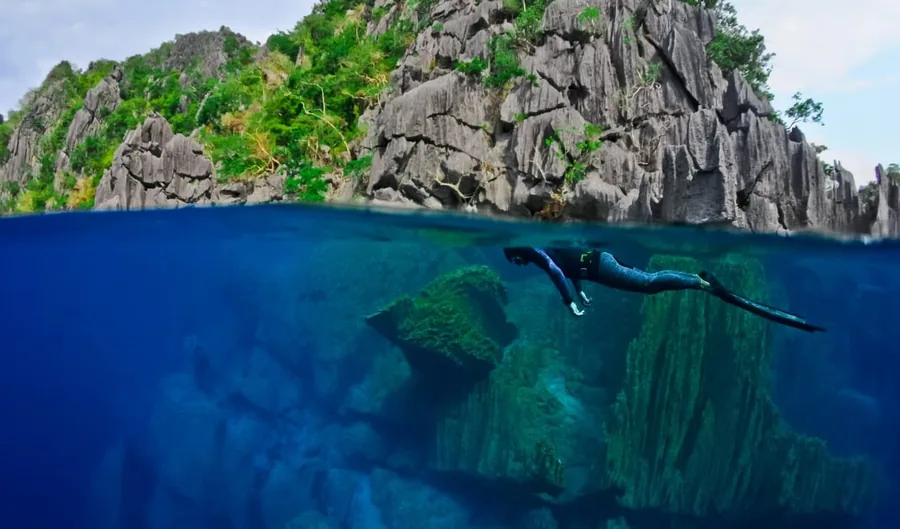 Barracuda LakeCoron Island · ~42 m deep
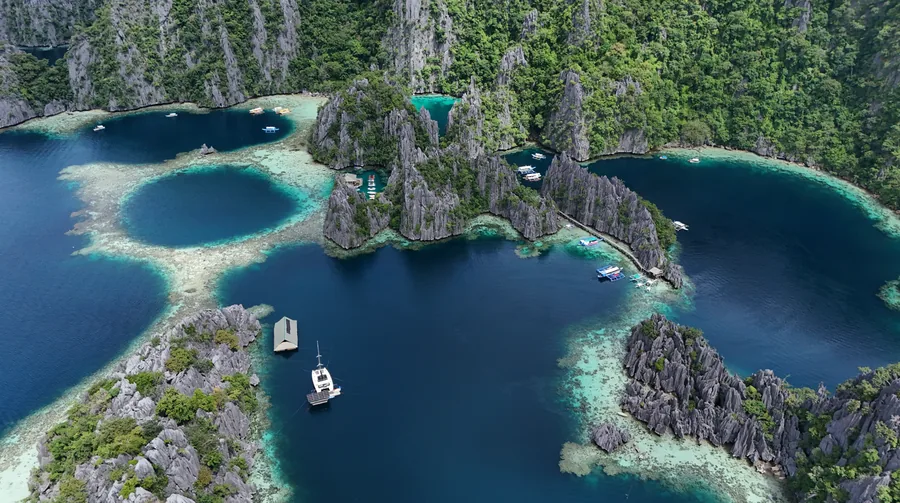 Twin LagoonCoron Island · 29–30 °C
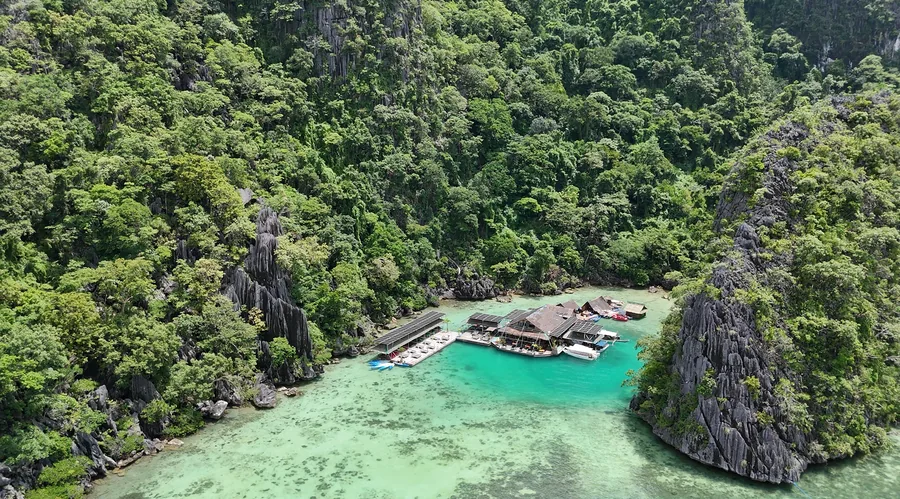 Paolyn Private LagoonsLaknisan Lagoon · ~30 m deep
 Cathedral CaveCoron Island · 6–8 m entrance